

The Three Stages of Eyelash Growth
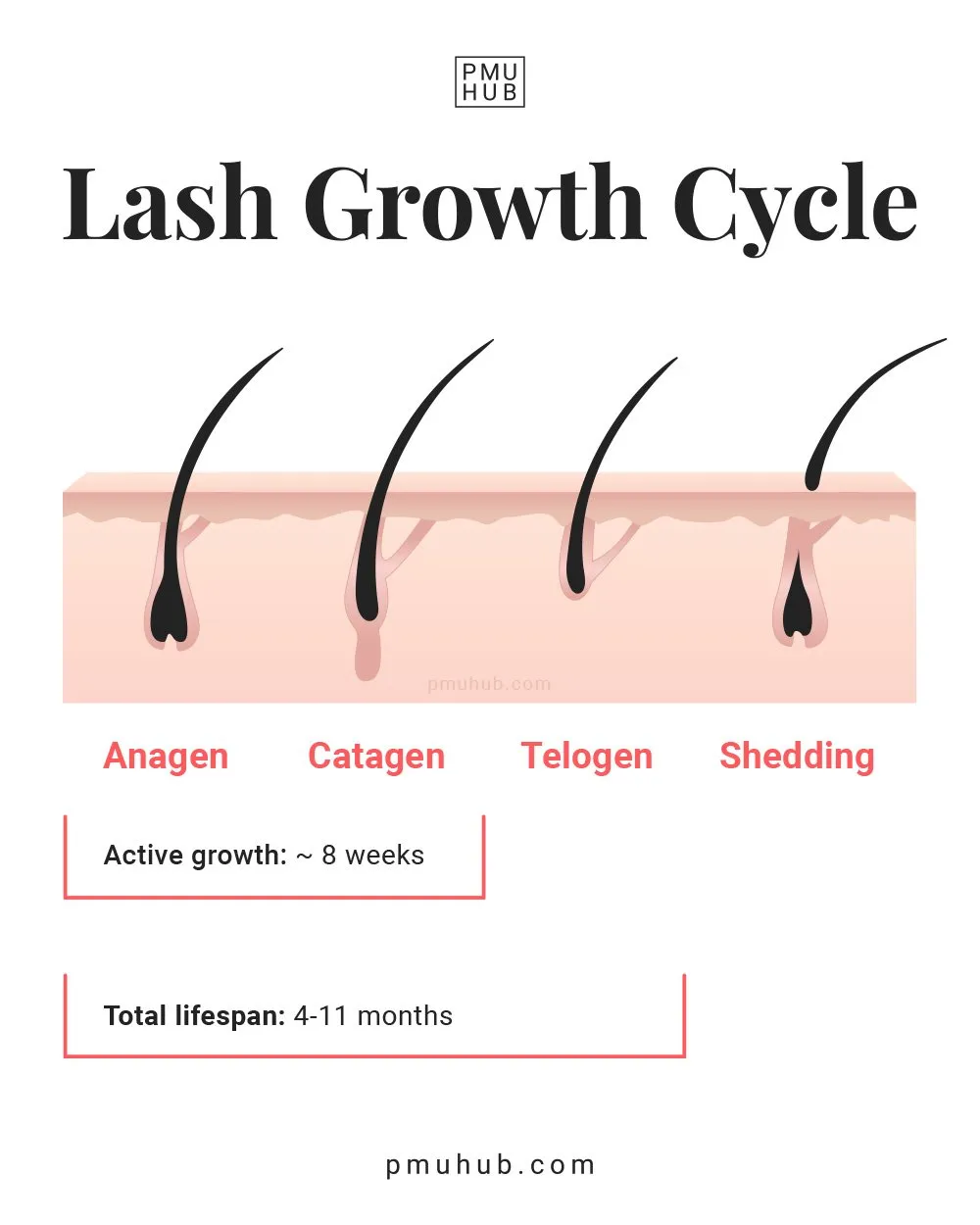
Much like the hair on your head, eyelashes go through three main growth stages: Anagen Phase (Growth Phase), Catagen Phase (Transition Phase), and Telogen Phase (Resting Phase). These three stages together determine the lifecycle of each eyelash.
- Anagen Phase (Growth Phase)
- What is the Anagen Phase?
The Anagen phase is the active growth stage of your eyelashes, where they are rapidly growing out of the follicle. About 40% of upper lashes and 15% of lower lashes are in the Anagen phase at any given time. This phase typically lasts 30 to 45 days and determines the final length of the lash. - Why is it important?
The length and thickness of your eyelashes depend on the duration of the Anagen phase and the health of the follicles. If the Anagen phase is short, the lashes may be shorter and less dense. - Catagen Phase (Transition Phase)
- What is the Catagen Phase?
After the Anagen phase, the lashes enter the Catagen phase, also known as the transition phase. During this stage, the lashes stop growing, and the follicles begin to shrink. This process typically lasts 2-3 weeks. During this time, the lashes remain attached to the follicles but no longer grow. - Why is it important?
Lashes in the Catagen phase are in a delicate state. Any excessive pulling or improper care could cause the lashes to fall out prematurely. Therefore, special attention should be given to protecting the lashes during this stage. - Telogen Phase (Resting Phase)
- What is the Telogen Phase?
The Telogen phase is the resting stage of the lashes, which typically lasts around 100 days. During this phase, the lashes eventually fall out naturally to make way for new lash growth. - Why is it important?
In the Telogen phase, it is normal for lashes to fall out naturally. Losing a few lashes each day is no cause for concern, as it signifies the growth of new lashes.
The Importance of Understanding the Eyelash Growth Cycl
Understanding the eyelash growth cycle is crucial for anyone getting eyelash extensions or lifts. It not only helps you understand why certain lashes shed at specific times, but also aids in better caring for and maintaining your lashes.
Why do lashes sometimes “fall out more”?
After the Telogen phase, you may notice an increase in lash shedding. This is because new lashes are growing, and the old ones are completing their lifecycle. This is a natural phenomenon, but knowing this can help alleviate any unnecessary worries about lash loss.
How to Extend the Anagen Phase?
While you can’t directly control the length of the Anagen phase, you can indirectly support healthy lash growth by maintaining a balanced diet, using appropriate lash care products, and avoiding excessive rubbing of your lashes.
Conclusion: Embrace the Natural Cycle of Your Lashes
The eyelash growth cycle is a natural and continuous process, with each lash going through growth, transition, and resting phases. Understanding this process not only helps you better comprehend the changes in your lashes but also allows you to approach beauty care with more confidence and ease. Next time you admire your beautiful lashes, take a moment to appreciate the scientific wonders behind these tiny hairs.
At Blissful Lash Beauty, we are dedicated to helping you enhance the natural beauty of your lashes through our professional services. If you have any questions about lash care, feel free to contact us—we’re here to provide expert advice and services!